
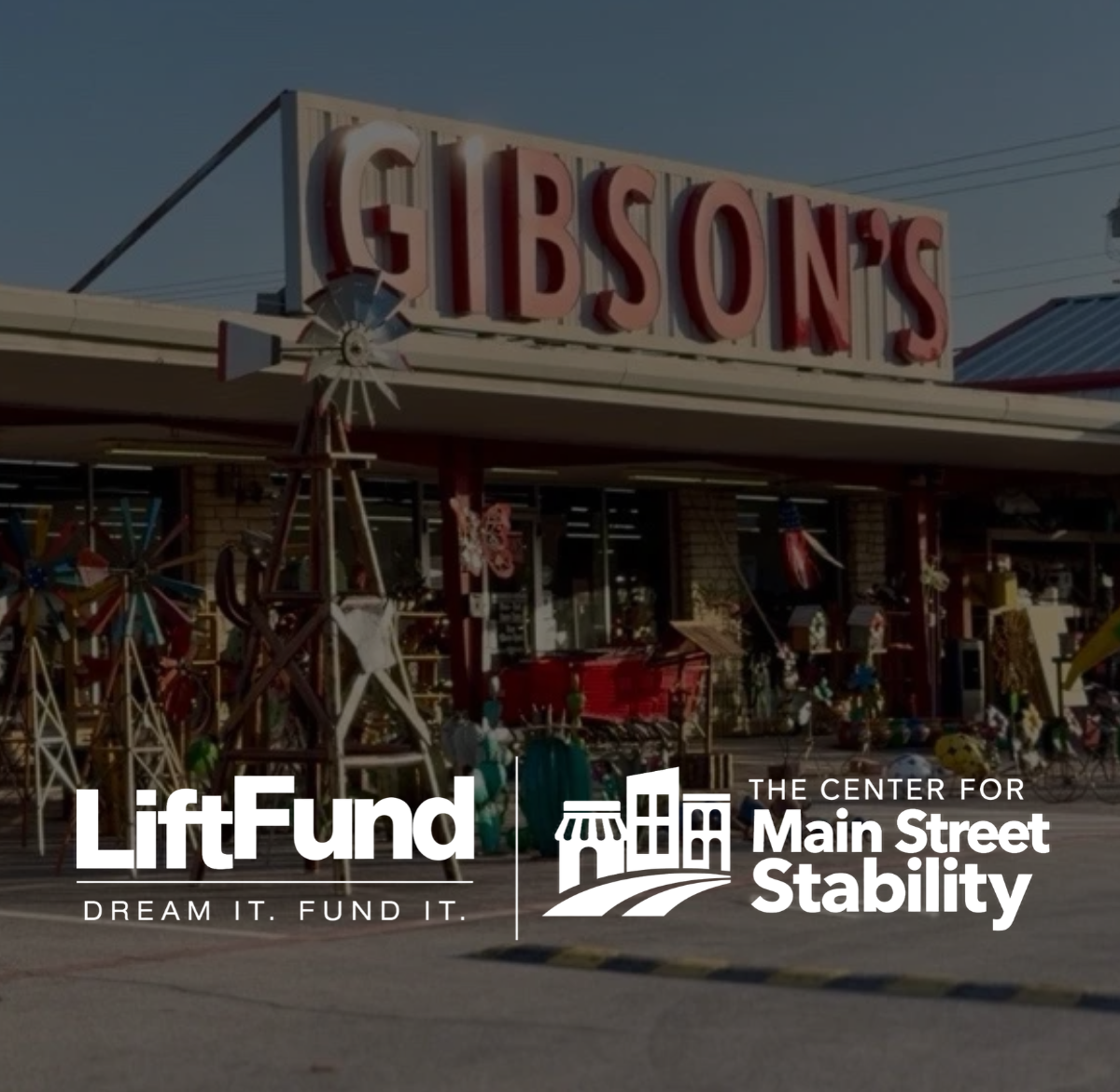
On July 16, 2026, six inches of water entered Bonna Kemp’s family store. Gibson’s Discount suddenly faced losses from damaged merchandise, fixtures, and equipment. The store, which has operated at the same location since 1968, abruptly confronted questions businesses must face after disasters anywhere in the country. How could it rebuild without running out of money? The owners turned to the nonprofit lender LiftFund for funding the business could put to work immediately.
This was not a one-off situation. Businesses in New Mexico and across the country are experiencing severe weather and other disasters that disrupt operations and put livelihoods at risk of collapse.
Small businesses often enter crisis with little room for delay. Research has found that half of U.S. small businesses operate with less than one month of cash buffer. A September 2026 Federal Reserve analysis found that 84% of disaster-affected small firms experienced business interruption or lost sales. Fewer than one-third carried insurance covering those losses, and only 4% of firms that sought external funds received enough to fully cover their losses.
LiftFund Responds with the Launch of the Center for Main Street Stability
Experiences like Gibson’s helped shape LiftFund’s conclusion that small-business recovery infrastructure needs to exist before the next disaster occurs.
The Center for Main Street Stability is a LiftFund initiative built to help small businesses withstand disasters and major disruptions and help communities recover with them. The center connects preparedness, rapid capital, business support, partnerships, research, and policy to build stronger recovery systems before they are needed.
The national initiative combines direct funding and rapid recovery, long-term rebuilding support, preparedness education, advocacy, and a platform for capacity-building in local small business ecosystems. It builds permanent capability that can be used repeatedly in communities impacted by disasters. It directly supports both small businesses and local community organizations.
“We have learned from disaster after disaster that the question is not whether capital exists, but whether the right capital reaches a business at the right time,” said Amy Hereford, President and CEO of LiftFund. “A business may need cash immediately to make payroll and different financing six months later. Recovery systems should be built around how businesses actually recover.”
The Center for Main Street Stability organizes its work around three stages: Prepare. Respond. Recover.
Before disruption, businesses need financial readiness, continuity planning, and connections to resources. In the immediate aftermath, they need grants and capital that can be readily deployed. For long-term recovery, they need affordable financing and other support as they rebuild operations and remain part of the local economy.
LiftFund has tested its approach through hurricanes, floods, tornadoes, and wildfires, as well as disruptions that may never receive a federal disaster declaration, including infrastructure failures, water outages, and prolonged construction. Across more than 50 disaster and business-disruption responses, LiftFund has deployed more than $250 million in relief funding to thousands of small businesses.
“Small-business recovery is often treated as a response to an event,” Hereford said. “We believe it should be treated as infrastructure. Communities should not have to invent a new system every time something goes wrong.”
A central focus of the center is positioning capital before disasters occur so it can move when businesses need it. The Center for Main Street Stability works with financial institutions, philanthropy, and policymakers to explore mechanisms for making that possible, while using LiftFund’s field experience to identify gaps in existing recovery systems and inform state and federal policy.
That approach aligns with the Aspen Institute’s 2026 report, From Crisis to Continuity: Optimizing CDFI Capital and Partnerships for Natural Disaster Response. The report found that small businesses can face an immediate liquidity crisis after disaster and emphasized the importance of rapid capital and preparation before a disaster occurs.
LiftFund’s objective is to replace a recurring cycle — disaster strikes, money is raised, programs are assembled and businesses wait — with a recovery system built before the next disruption occurs.
“If we already know small businesses will need capital immediately after the next disaster,” Hereford said, “we should not wait until it happens to figure out how to reach them.
A Lift for Gibson’s
The approach is working for Gibson’s Discount. Employees spent weeks removing water, shoveling mud, and rebuilding in triple-digit heat as recovery expenses mounted.
“Right now, every single penny counts,” said Bonna Kemp Odle, co-owner of Gibson’s Discount. We were able to secure those funds and use them immediately for things we had never considered,” she said.
Established in 1994, LiftFund is a nonprofit community development financial institution (CDFI) that provides capital and business support to help entrepreneurs start, grow and recover. LiftFund has deployed more than $1 billion in capital and responded to more than 50 disasters and major business disruptions, working with financial institutions, philanthropy, government, and community partners to strengthen local economies and the communities that depend on them.
Learn more about LiftFund, and access its disaster and recovery resources. Read the LiftFund press release about the launch of the Center for Main Street Stability.