
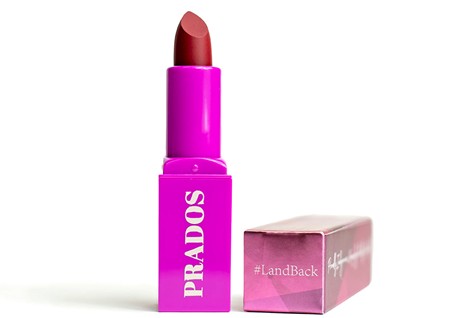
When Cece Meadows walked into rooms filled with prospective investors, she knew they saw a red flag.
During the height of the pandemic, her company, Prados Beauty, had donated 50 percent of its sales — not profits — to buy protective gear for Indigenous communities. To your typical venture capitalist or big-bank lender, that looked like a liability.
But for Meadows, a Xicana of Yaqui descent, that was the entire point. Meadows lives by her grandmother’s advice, which translates as “Everything you do with a good heart can never go wrong.”
Today, that model has a proven return on investment. Prados Beauty is the top-selling independent color cosmetics brand at JCPenney, moving products in 609 stores and becoming the first beauty line ever sold at the Smithsonian.
The brand reached these heights, in part, through Meadows’ partnership with the Rooted Relative Fund offered through the nonprofit lender Rural Community Assistance Corporation (RCAC). Fund managers viewed Meadows’ commitment to community not as a “risk” but as the secret to her success.
The 2025 crunch
In 2025, global tariff shocks hit the beauty industry hard. For Prados, which sources ingredients from Mexico, Canada, and Italy, costs escalated daily. A shipment at the dock on Monday could cost thousands more by Wednesday. Meanwhile, JCPenney was reordering at record pace for the holiday rush. This ensnared Meadows in the classic growth trap: Prados was wildly successful but increasingly cash-poor, struggling to release inventory and satisfy demand.
Traditional banking relies on a rigid set of rules — credit scores and real estate collateral — that often act as a “Keep Out” sign for entrepreneurs on tribal lands or those historically locked out of generational wealth.
Unlike the months-long process to obtain a commercial bank loan, the partnership with the Rooted Relative Fund, backed by RCAC, quickly met the company’s needs.
A $250,000 loan to Prados cleared the containers at the port, which allowed Meadows to fulfill her massive contract with JCPenney. That allowed her to deepen her collaborations with other Indigenous creators — including a collection with ledger artist and fashion designer Lauren Good Day that has repeatedly sold out. In the fall, JCPenney made it the centerpiece of its inaugural Native American Heritage Month event.
Building what the industry wouldn’t
Meadows is a daughter of farmworkers and immigrants who spent childhood summers picking grapes alongside her parents, learning the value of labor long before she learned the value of a brand. At 14, she wanted a Clinique compact from a department store — $21 for a shade that was never quite right — and watched her parents weigh that cost against bags of beans and rice.
Working as a makeup artist in her twenties, Meadows was diagnosed with ovarian cancer. Treatment left her skin so sensitized that traditional brushes felt abrasive, and she realized their porous fibers could harbor bacteria — a risk for her compromised immune system. When she couldn’t find a professional-grade tool that was both ultra-soft and easy to sanitize, she engineered her own.
She was also tired of industry formulations that prioritized translucency for light skin while ignoring the rich pigmentation required for deeper, melanated tones.
In 2019, she launched Prados Beauty from her daughter’s nursery with just $150. The brand was barely a year old when the pandemic hit. As COVID-19 devastated Native communities, Meadows and Kiowa/Choctaw artist Steven Paul Judd made the decision that would define their legacy: they donated 50 percent of their revenue to purchase PPE for tribes, from the Navajo Nation to communities in Mexico, Canada, and New Zealand.
The sacrifice strained margins but earned Prados fierce customer loyalty. By the time her Matriarch Eyeshadow Palette won an Allure Best of Beauty Award in 2022, Prados was a national contender.
Meadows said watching Good Day walk into JCPenney and see her work on the shelves for the first time was the clearest expression of what she’d built Prados to do.
Focused on Rural Lending
RCAC is a nonprofit Community Development Financial Institution (CDFI) that provides training, technical and financial resources, and advocacy to help rural communities and businesses achieve their goals and visions. RCAC’s loan funds fill financing gaps in rural and Native communities in New Mexico and 12 other western states. RCAC offers loans for affordable housing, environmental infrastructure, community facilities, and small businesses.
Learn more about RCAC, and read the entire story about Cece Meadows and Prados Beauty.
Article excerpted from the original by Elliott Bochstein, staff writer, Rural Community Assistance Corporation. Photographs by Debbie Black Hawk Photography.